Dan, always a strong advocate for his daughter, noticed she was far too quiet and had begun losing weight. The family went to the emergency department, only to be sent home when nothing seemed “critical enough.” But her symptoms persisted, and soon they found themselves back at the GP, and then back in hospital again.
What followed was an eight-week hospital stay, during which the family searched desperately for answers. Through repeated infections—rhinovirus, UTIs—and growing lethargy, Eva continued to decline. One day, Dan walked into her hospital room and instantly knew: she’s not okay.
Shortly after, Eva went into metabolic acidosis, a frightening and dramatic turn that saw her rushed to the PICU. Doctors struggled to find a vein, eventually placing a cannula on her head—the only place they could access. She received her first plasma treatment there in the PICU. It was deeply traumatic for the family but lifesaving for Eva.
Back on the ward, Eva became a patient of both gastroenterology and general paediatrics. She underwent countless tests—biopsies, endoscopies, colonoscopies—but nothing explained the severity of her illness. Pathology eventually suggested an immune cause, and in July 2023, the family met with a genetic counsellor and an immunologist. Eva was treated for autoimmune enteropathy and started on steroids, all while cutting her first two little teeth.
In August, genetic testing finally gave the family the answer they had been searching for: LRBA deficiency. Eva was missing a crucial protein that helps regulate the immune system, essentially removing the “brakes” and causing it to attack her own body. She began weekly Abatacept injections at home, administered by Alice and Dan. Her condition became manageable, but it was not a long-term solution.
Just a month later, in September 2023, Eva had a severe FPIES reaction to cow’s milk—another layer of complexity on top of her immunodeficiency.
By mid-2024, her medical team gently introduced the possibility of a bone marrow transplant (BMT). The process was incredibly thoughtful, preparing the family step by step. They met the BMT specialist and a fertility physician to discuss preserving one of Eva’s ovaries before chemotherapy. Then came the news that changed everything: her big brother, four-year-old Teddy, was a perfect donor match.
Explaining this to Teddy was emotional—he feared hospitals and needles. His own oncologist and social worker supported him through the process. On the big day, the Starlight Foundation, The Children’s Hospital Foundation and hospital teams rallied around him, turning what could have been a terrifying experience into a cheerful distraction.
In January 2025, both children began their work-up appointments. In February, Eva was admitted for conditioning chemotherapy—essentially wiping out her immune system to prepare for Teddy’s cells. Eva lived in a “cotton-wool bubble,” in isolation on Ward 11B. Baths every six hours helped remove chemotherapy leaking from her skin, but they were painful and distressing. Her skin broke down. She was connected to a nasogastric tube, on morphine, and extremely unwell.
Through it all, Alice and Dan took turns living on the ward, surrounding her bed with photos and posters from home.
On 26 February Eva received her transplant. Teddy underwent his stem cell harvest, which produced an unusually strong, healthy collection—something the team celebrated. Teddy’s cells were infused gently through Eva’s central line—a surprisingly quiet moment following such enormous effort.
Eva remained very sick afterward, needing platelet transfusions and constant monitoring. Her hair was shaved on 5 March. Every day, her team watched closely for signs of engraftment—Teddy’s cells taking hold.
And then, slowly, she began to turn a corner.
On 21 March, Eva walked again for the first time. On the 23rd, Teddy visited. On 24 March, she was discharged—far earlier than expected. The medical team kept reminding the family just how extraordinary her recovery pace was.
At home, life was strict but hopeful: medications, milk pumps, isolation, no daycare. But Eva improved steadily. Her central line was removed in August and in November 2025, her nasogastric tube came out—on Teddy’s birthday, which felt beautifully symbolic.
Now three years old, Eva is receiving her newborn vaccinations and, remarkably, is off all medications. Her chimerism tests showed 100% Teddy’s cells early on, and still above 95% now—an excellent outcome.
The family feels incredibly fortunate. The first six months post-transplant were the most dangerous, and Eva has made it through. She is energetic, social, and full of joy.
In 2026, the family is looking forward to a “normal” year—Teddy starting Kindy, and Eva beginning after-Kindy care.
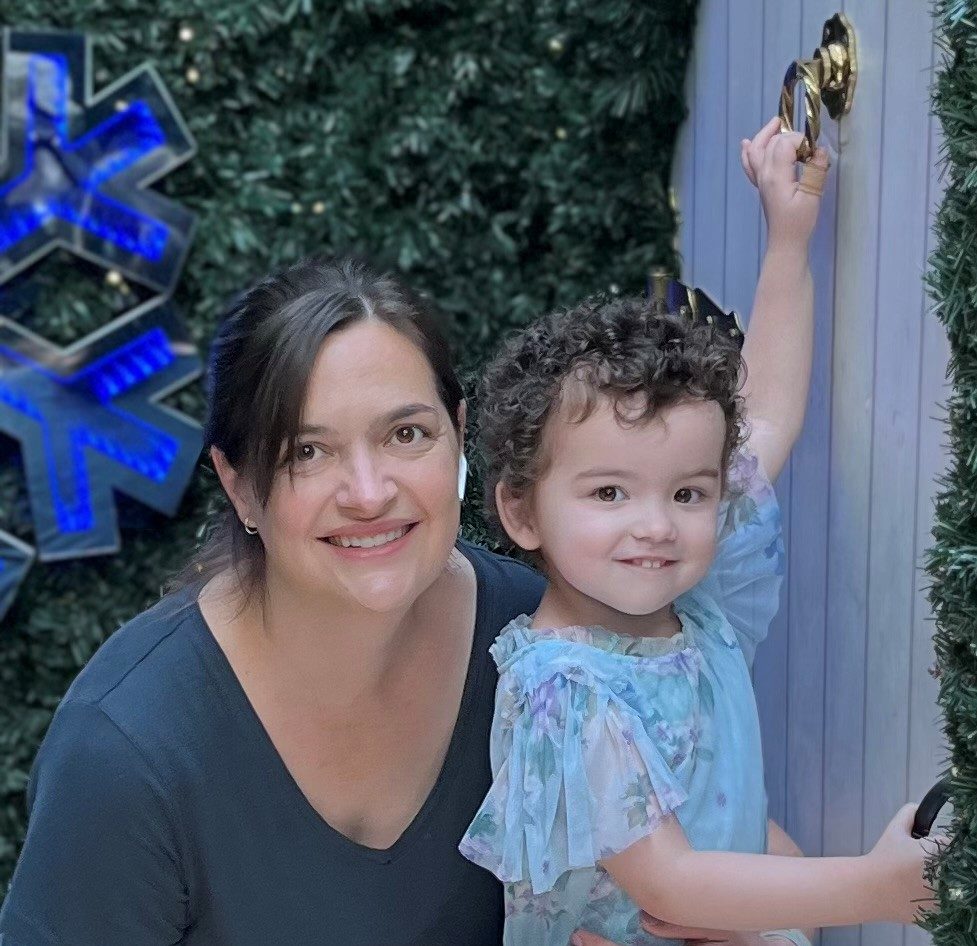
Today, Eva loves dancing, bouncing on the trampoline, and playing in the sandpit. She has made her first friend—her brother’s friend’s sister—and greets everyone she meets with enthusiasm.
Above all, she is stoked to be here.
A little girl who has fought unimaginable battles and continues to shine.